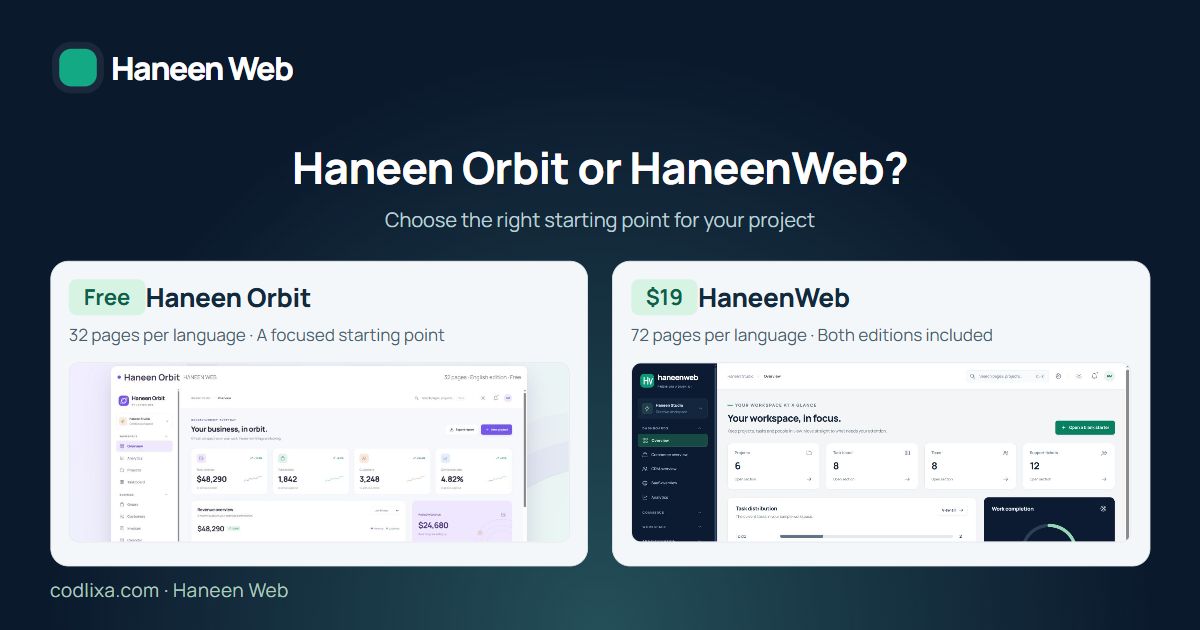
A dashboard template should give your project a clear starting point. Haneen Web offers two options: the free Haneen Orbit and the larger HaneenWeb bundle, which includes Arabic and English for $19. This guide compares their scope, shows real screenshots and explains what still needs to be built when you connect either template to a live application.
Haneen Orbit: a free, focused starting point
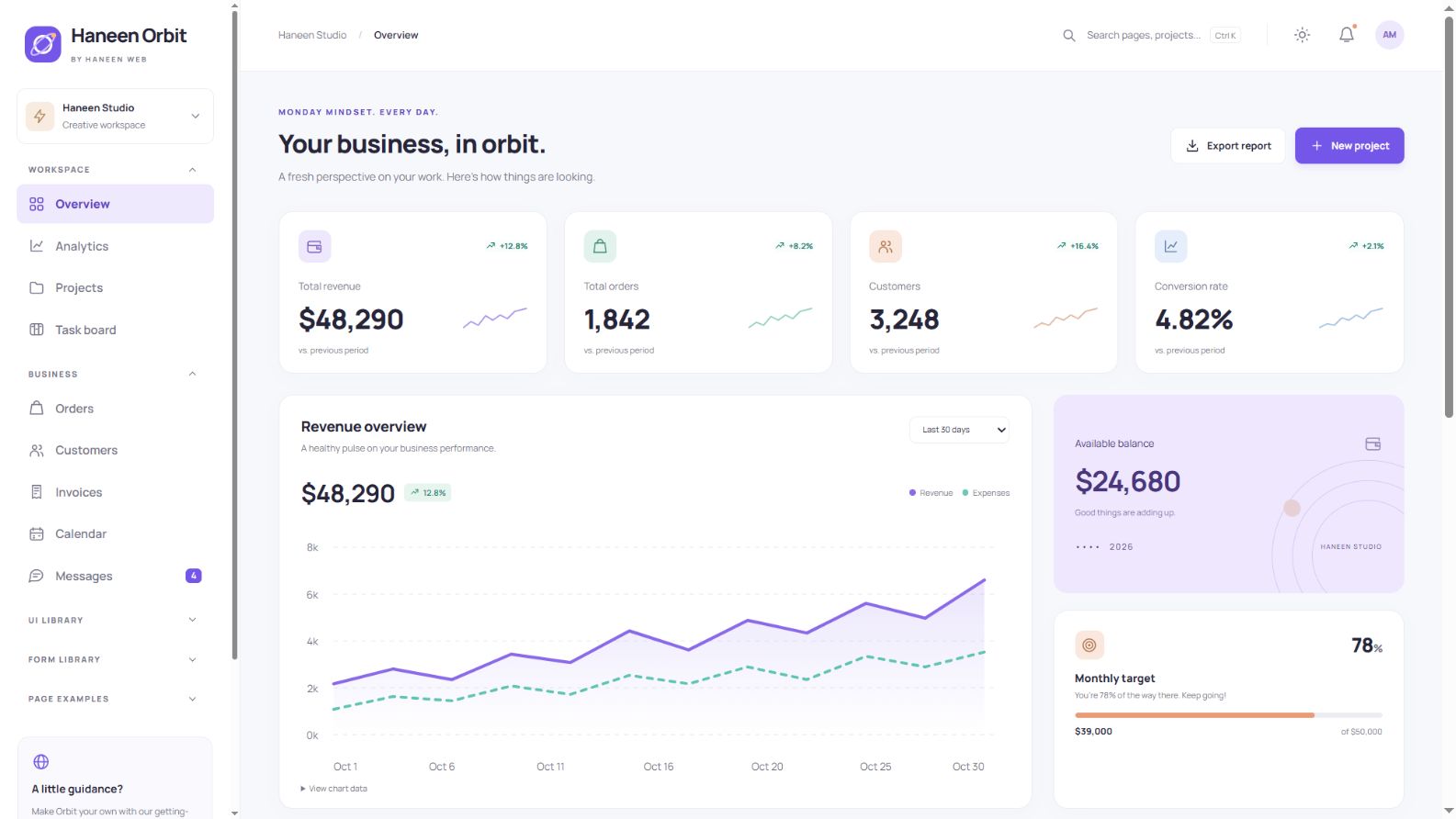
Haneen Orbit contains 32 pages in each independent edition: Arabic RTL and English LTR. Its examples cover the overview, analytics, projects, tasks, orders, customers, invoices, calendar and messages, alongside components, inputs, validation, tables and system screens. Editable source and documentation are included.
Choose it when you want to explore an idea, learn the structure of a dashboard or build a project whose needs are covered by this smaller collection. Its free-template license permits use and modification in personal and commercial end projects, while prohibiting resale or redistribution of the original template as your own template product.
HaneenWeb: more examples in one visual system
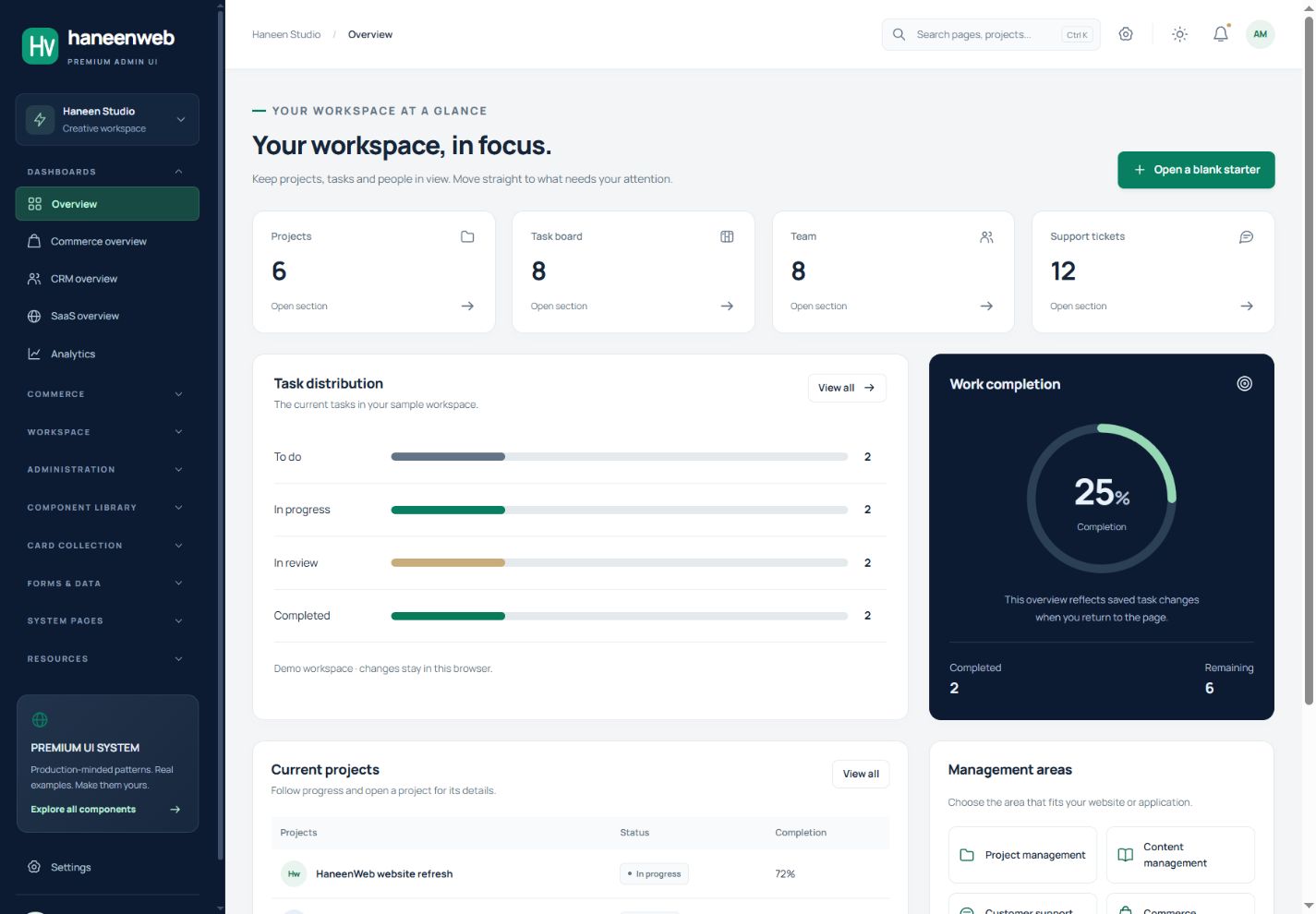
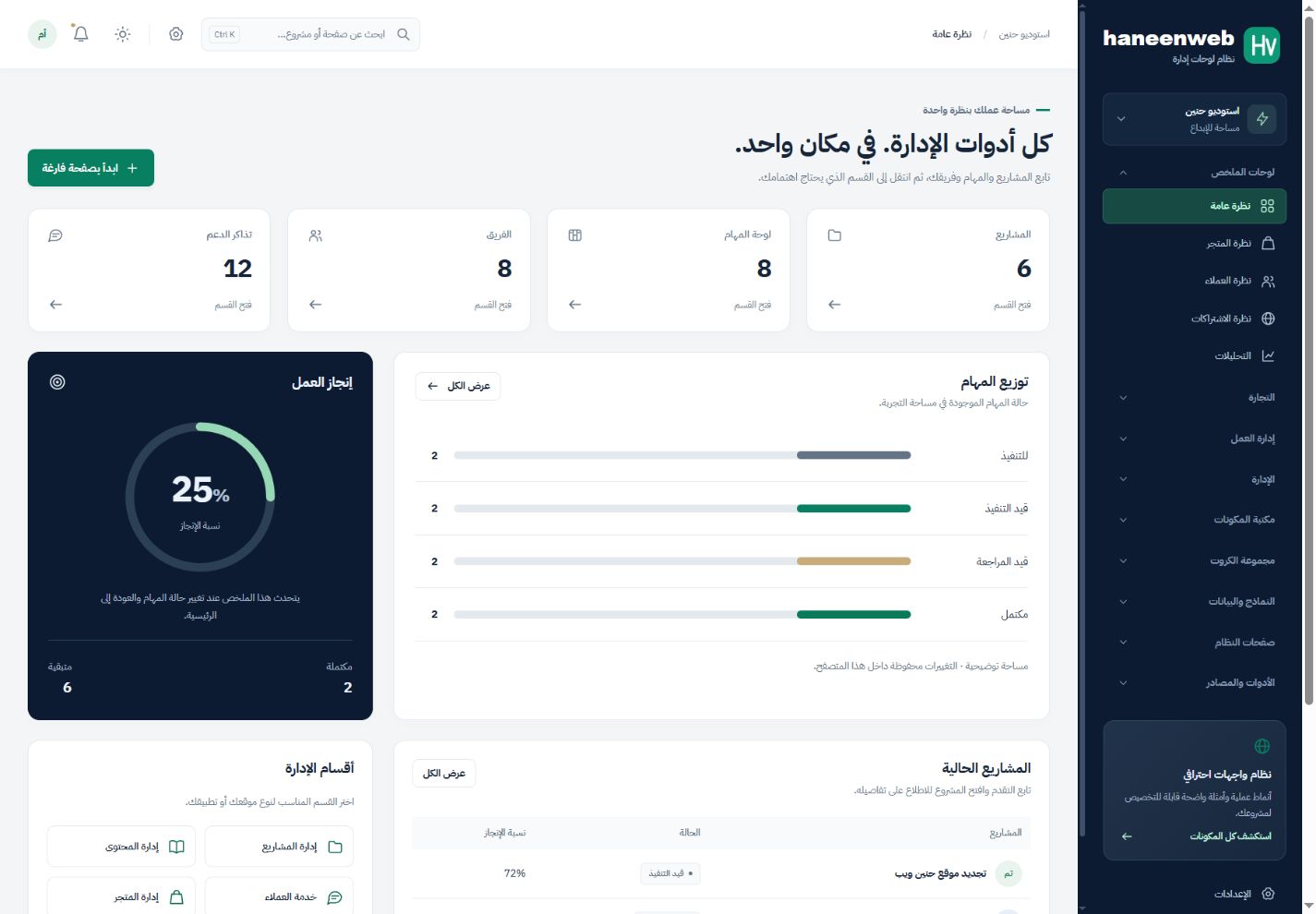
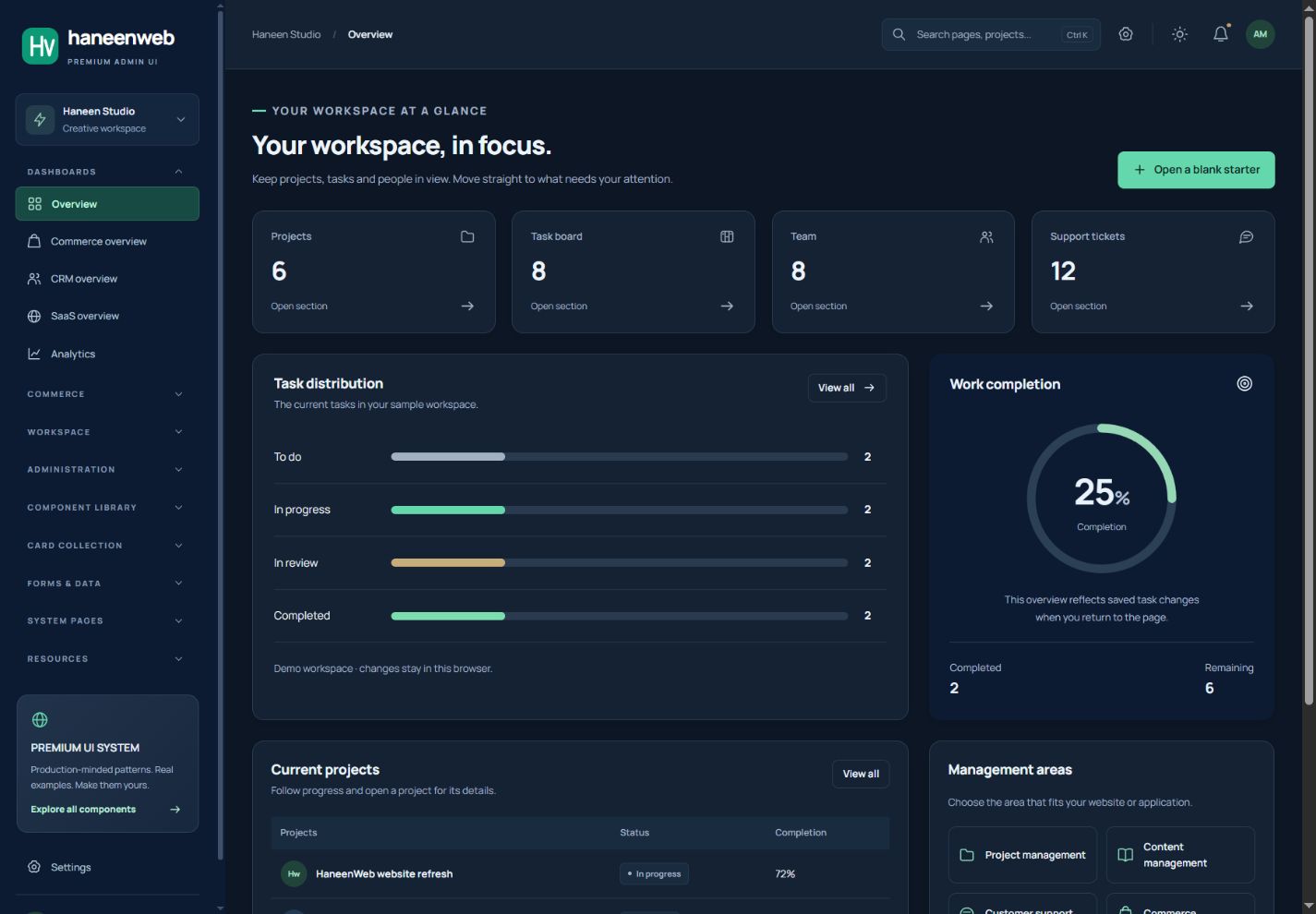
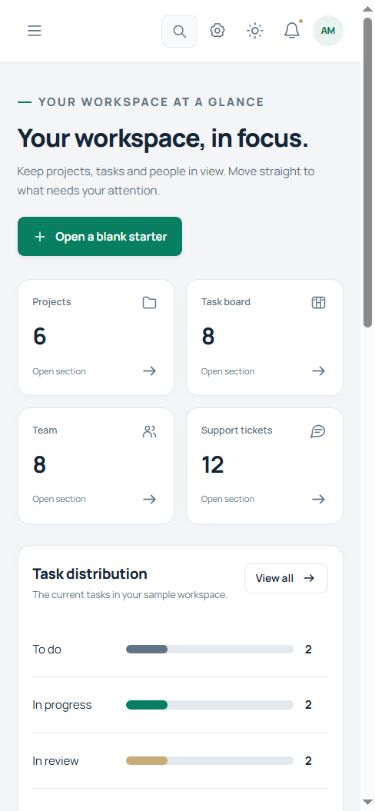
HaneenWeb provides 72 pages per language in a navy and emerald identity. Its general overview focuses on projects, tasks, the team and support tickets. Separate dashboard examples cover commerce, CRM, subscriptions and analytics. A single $19 purchase includes both independently runnable language editions, their editable source and documentation under one single-project commercial license.
The expanded collection is useful when one application needs several kinds of administration: content, projects, customer service, commerce and team management. Shared typography, spacing, colors and component states give developers a consistent starting point for those screens.
Forms, cards and reusable interface patterns
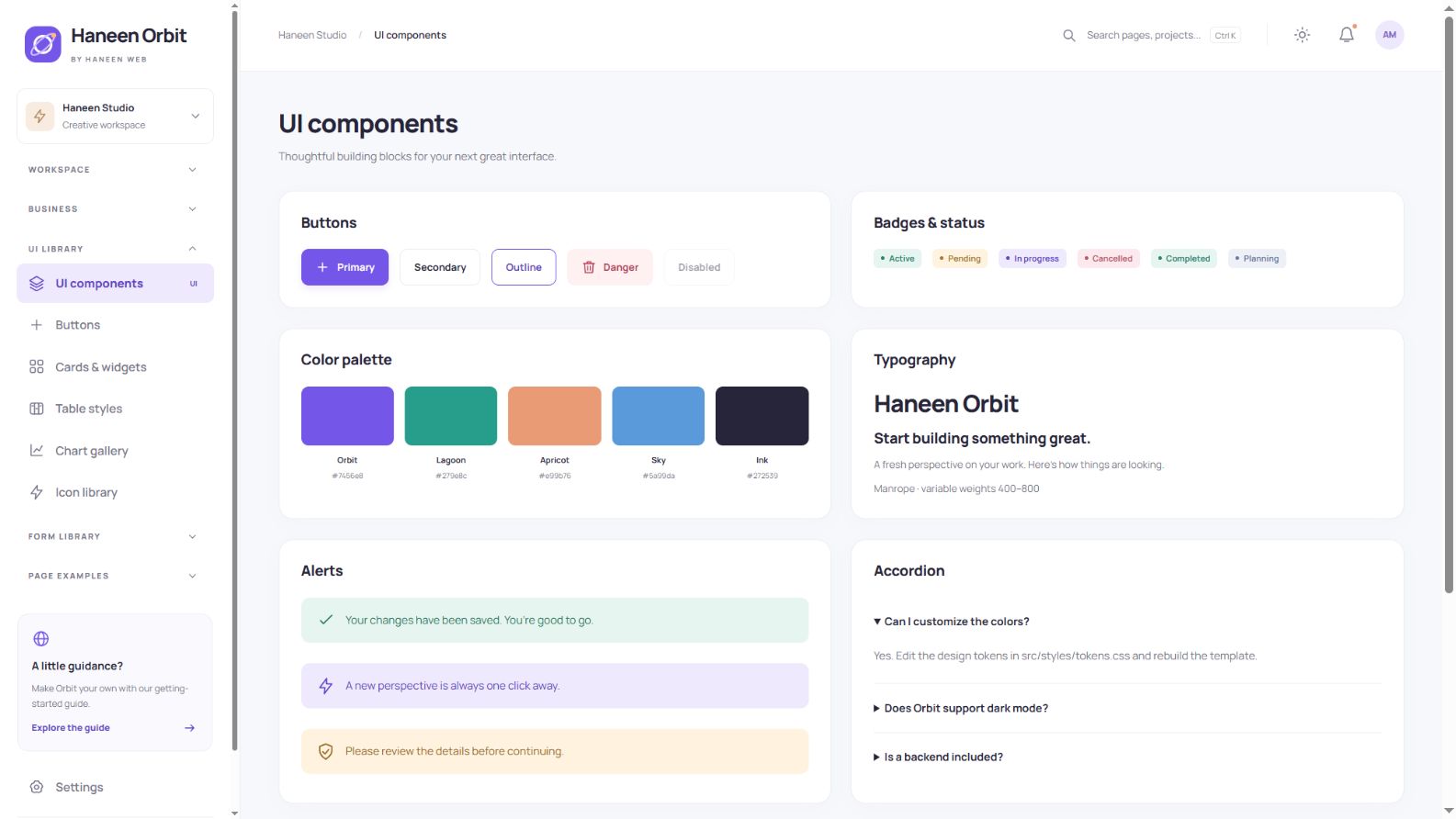
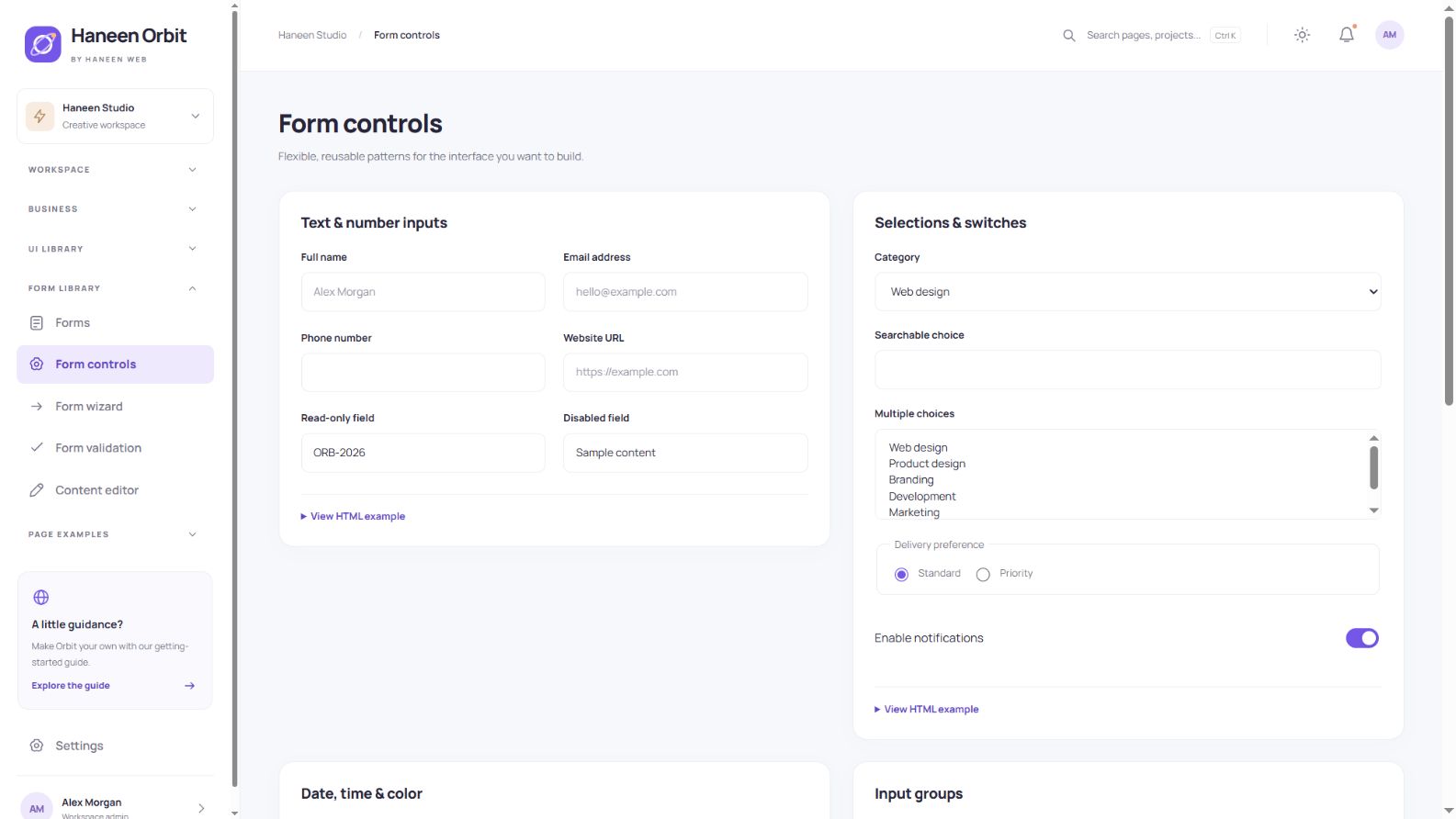
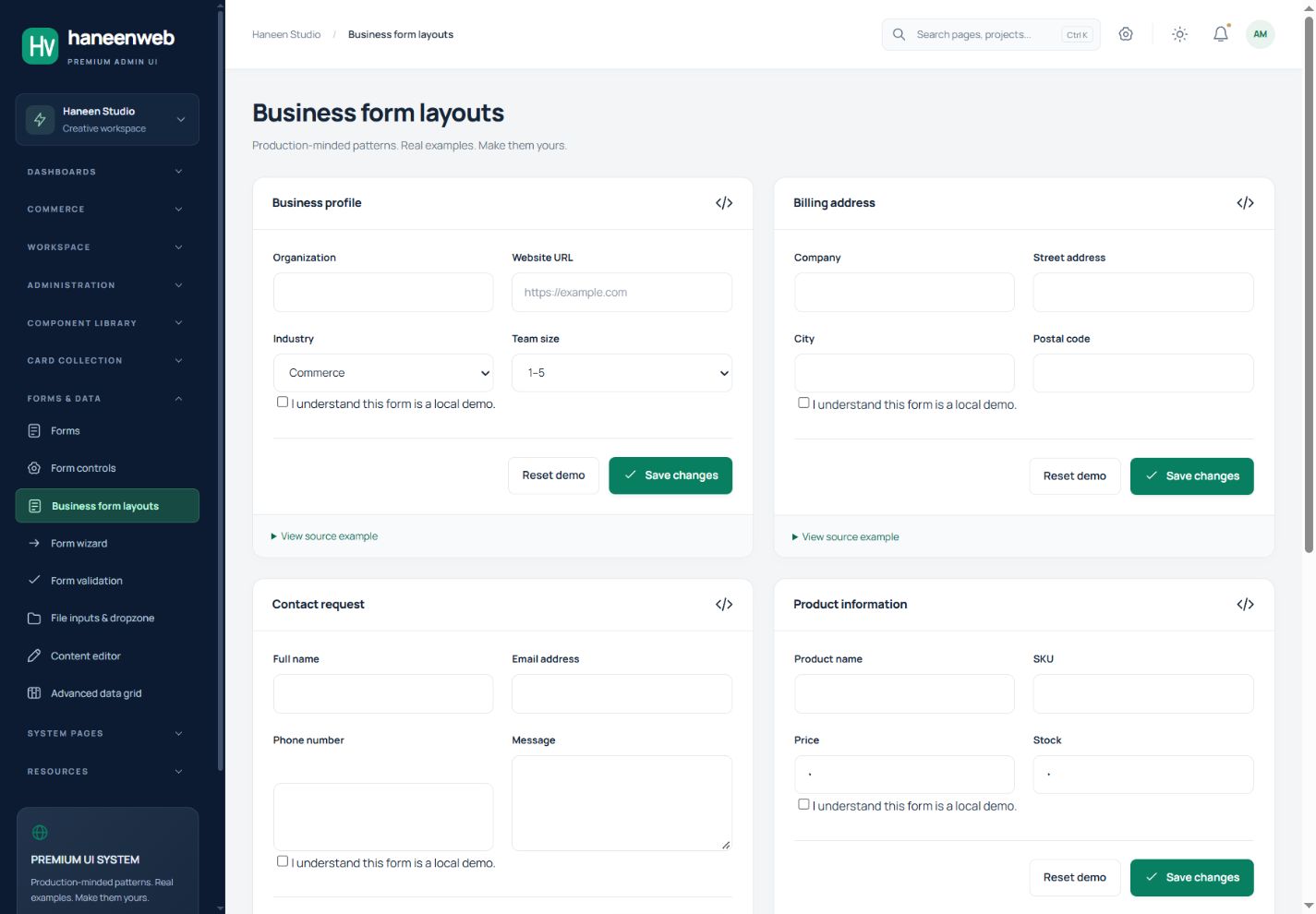
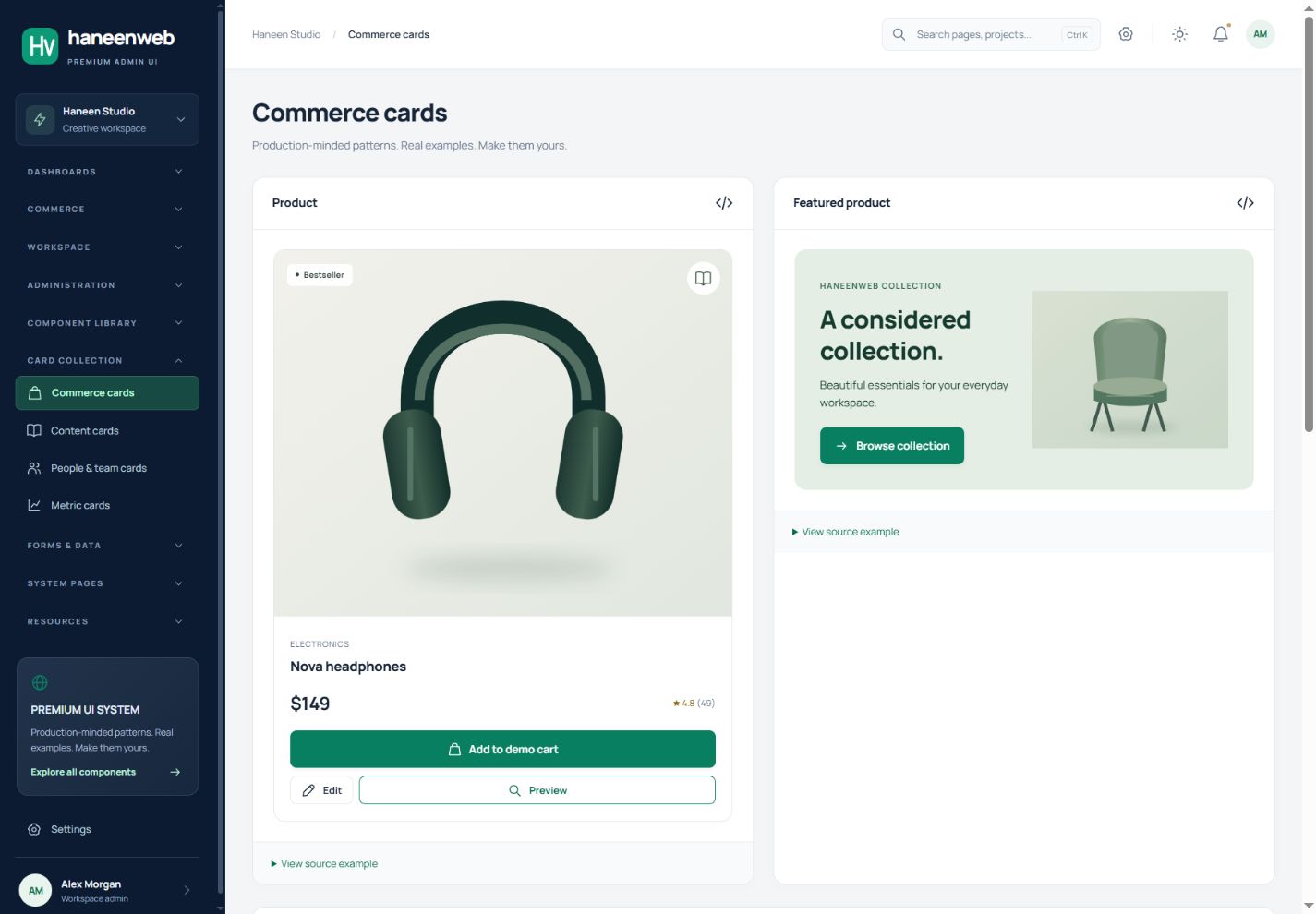
Four card collections cover commerce, content, people and statistics. The component library includes buttons, navigation, feedback, tabs, dialogs, drawers, tables, charts, icons and timelines. Business form layouts, a multi-step wizard, validation, an editor and file-input demonstrations help you explore common input workflows.
Application examples include articles, projects, tickets, files, team members, roles, activity, campaigns and integrations. They demonstrate the interface; a real service still needs its own data handling and backend enforcement.
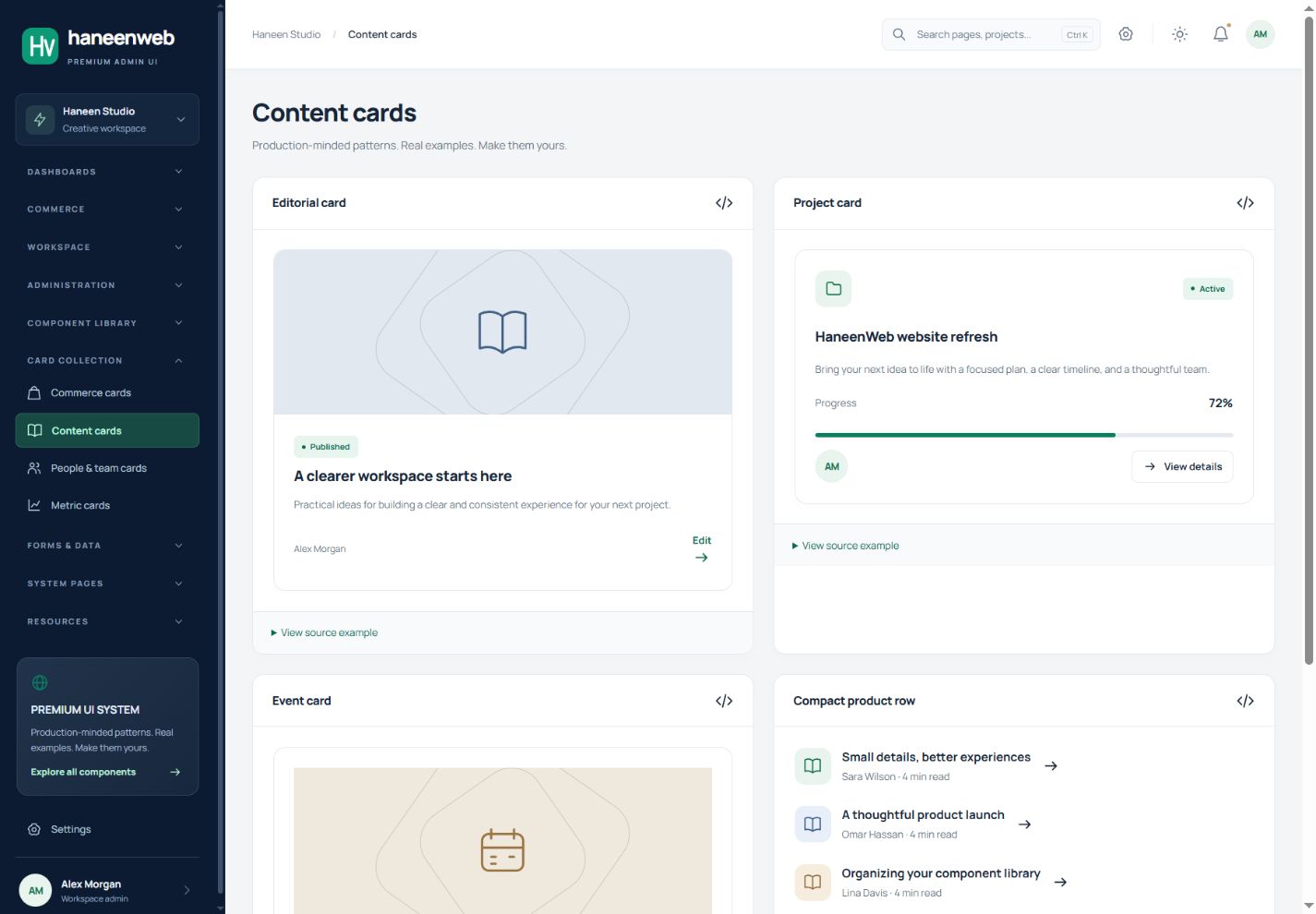
Commerce is one part of a general dashboard
For a store, start with the catalogue, product editor, inventory, orders, customers, invoices and checkout layout. For a content or service portal, start with articles, projects, tasks and tickets. Keep the pages you need and adapt the shared components to the rest of your application.
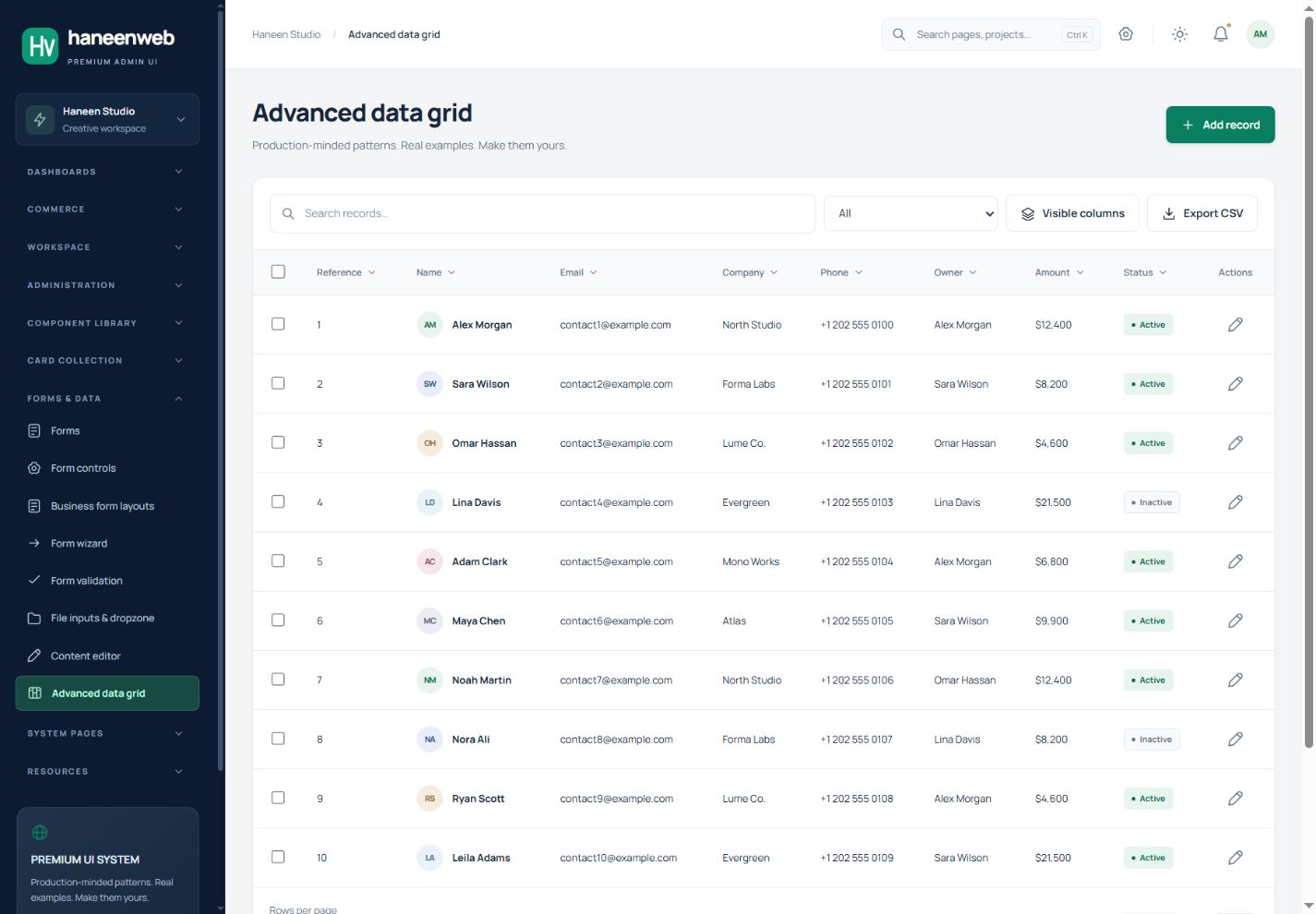
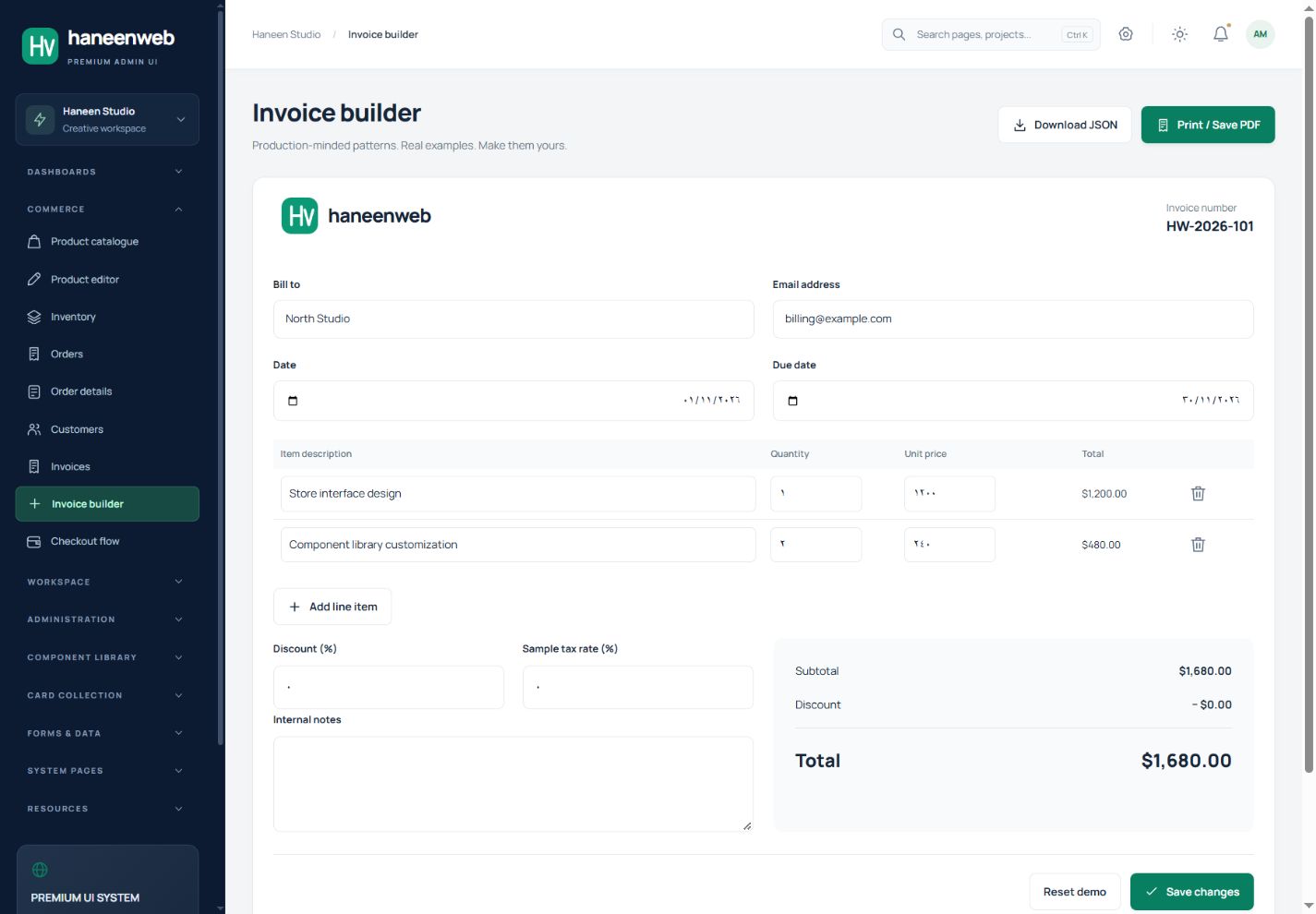
The advanced grid demonstrates search, sorting, filtering, column visibility and CSV export. The invoice builder demonstrates line totals, discounts, an illustrative tax rate and JSON export. These sample calculations do not replace your application's jurisdiction-specific tax or payment rules.
At a glance
| Feature | Haneen Orbit | HaneenWeb |
|---|---|---|
| Price | Free download | $19 for both editions together |
| Pages | 32 per language | 72 per language |
| Languages | Independent Arabic RTL and English LTR files | Independent Arabic and English folders in one bundle |
| Scope | A focused collection of administration examples | Broader application examples, card collections and business forms |
| Editable source | Included | Included |
| License | Personal and commercial end projects under its free-template terms | One personal or commercial end project for you or one client |
| Production backend | Requires integration | Requires integration |
Which should you choose?
Choose Orbit when its screens cover your requirements and a free starting point is the priority. It can be used in a commercial end project under its license; it is not limited to education.
Choose HaneenWeb when the additional page patterns, card collections and form layouts fit the project you are planning. Review the live examples and choose based on the work you need to do, rather than the page count alone.
From a template to a working application
- Extract the complete package and open the entry page for your preferred language.
- Review navigation, appearance, inputs and responsive layouts.
- Start from a blank starter or the closest example, then adapt branding and content.
- Replace local demonstrations with your application's database, authentication, storage, payment and email services.
- Validate inputs and enforce permissions on the server before launch. Hiding a button in the interface does not protect the underlying operation.
Each HaneenWeb edition has one root index.html file and four folders: assets, pages, docs and source. The ready interface runs without installing a framework. Rebuilding the editable source requires Node.js 20 or newer.
Preview behavior and license scope
The store preview uses synthetic data. Its isolated frame can restrict persistent storage and direct downloads. HaneenWeb explains page-only saves and provides selectable CSV or JSON contents in that environment; direct file downloads are available when the template runs outside the frame.
The paid license covers both languages in one end project, including client work and paid-access services. Additional independent projects need additional licenses. Resale or redistribution as a template is prohibited. Installation, hosting and custom development are not included. Read the full bilingual license on the product page before purchase. Orbit retains its separate free-template license.
Explore the examples
Review the screenshots and live previews, then select the foundation that matches your project. Both products are intended to be customized and connected to your own application.